




Movado Celebrates 145 Years of Swiss Craftsmanship.
Physicist Albert Einstein, famed artist Andy Warhol, American industrial designer Nathan George Horwitt and pop artist Kenneth Scharf don’t have much in common at first glance. Yet each played a role in the story of Movado, a Swiss watch brand whose history is far more surprising and richer than most people realize.
Currently celebrating its 145th anniversary, Movado is steeped in Swiss watchmaking history, rich in diversity, and full of surprises all along the way. It is a company born of innovation and creativity brought to life over the decades by some of the most talented watchmakers and artisans who poured heart and soul into its making.
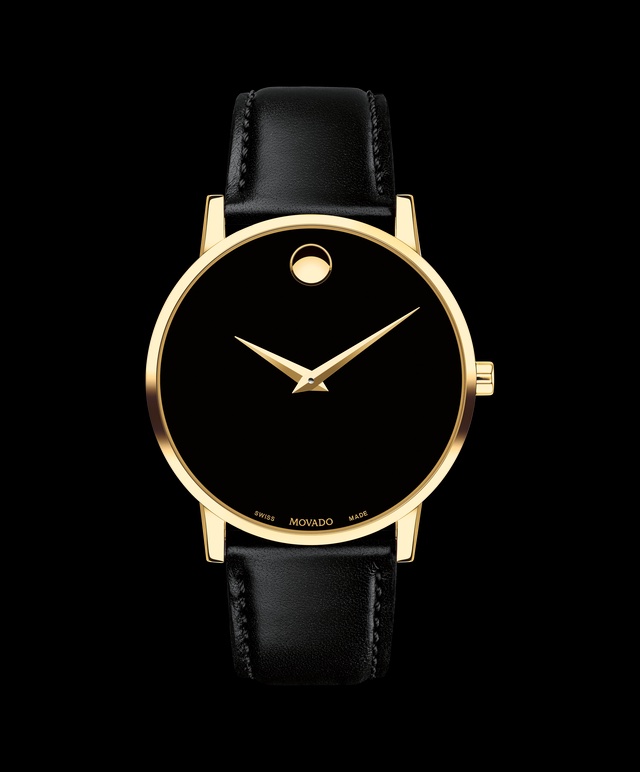
The layers behind this 145-year-old company are filled with pioneering milestones. Yet most watch enthusiasts today know Movado for its most immediately recognizable timepiece: the iconic Museum Dial watch devoid of markers and featuring a single dot at 12:00.
Movado boasts a rich history
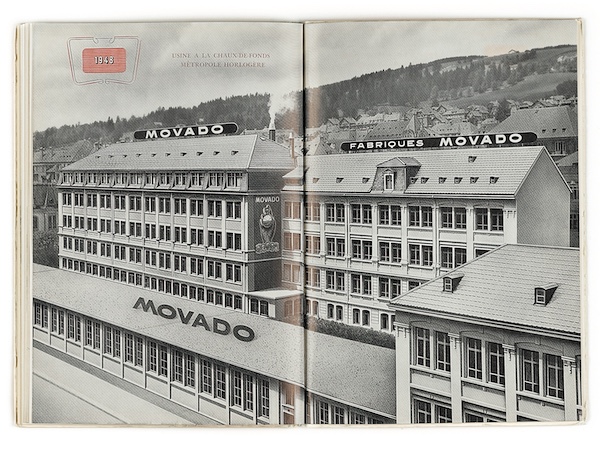
But that famous dot tells only a small part of Movado’s story and the role it plays in Swiss watchmaking. Founded in 1881 by nineteen-year-old Achille Ditesheim in La Chaux-de-Fonds, Switzerland, (though not officially named Movado until 1905), the brand quickly established itself as a company willing to push boundaries. By 1899, it had earned six first prizes at the prestigious Neuchâtel Observatory chronometer trials with tis pocket watches, demonstrating that the company was every bit as serious about precision as it was about design.
Movado Museum Classic watch
Innovation continued throughout the early decades of the twentieth century in technical prowess and cutting-edge design. Between 1910 and 1921 alone, Movado created more than 700 distinct watch case shapes, from rectangular designs to daring geometric forms. The company introduced the curved Polyplan in 1912 and, in 1938, unveiled the Calendograph chronograph, one of the earliest wristwatch chronographs with a complete triple calendar display. By the end of the twentieth century, Movado had amassed more than 100 patents.
Original Movado workshops in Switzerland
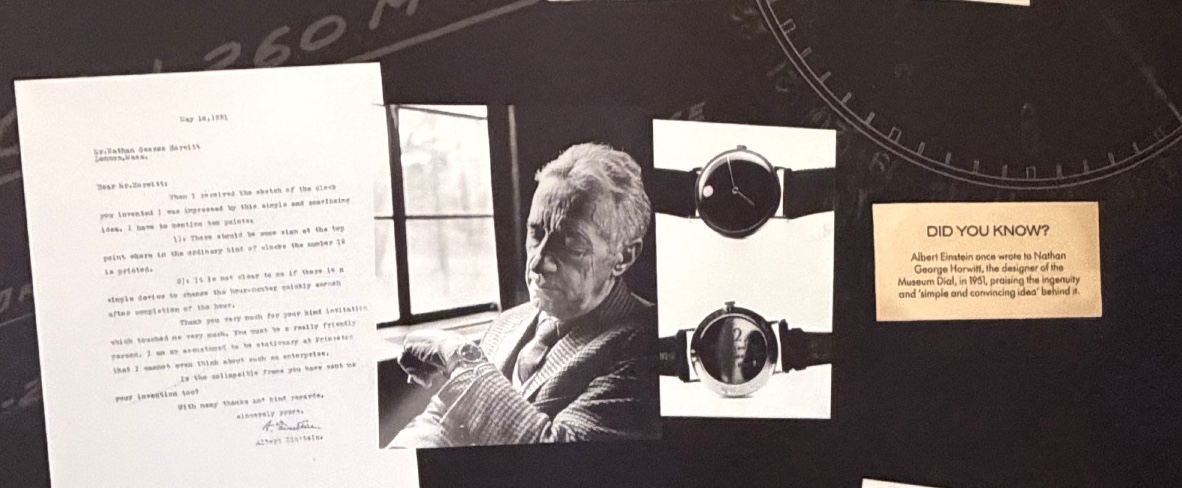
In 1947 the watch that would forever be synonymous with Movado, the Museum watch, was born. Designed by artist and industrial designer Nathan George Horwitt, the piece challenged nearly every convention of watch design. According to company archives, Horwitt exchanged correspondence with Albert Einstein regarding the minimalistic concept, sharing sketches of the radically simplified design. Einstein suggested the need for an orientation point that would allow the wearer to immediately recognize the top of the dial. Horwitt complied, devising a single dot at 12:00 to represent the sun at high noon.
So significant was the final result that the Museum of Modern Art (MoMA) in New York made the Movado Museum Dial part of its permanent collection in 1960 and today it resides in more than 20 museum collections around the world.
The Modern Movado History That Few Know
But it’s really the more modern history that strikes a relevant chord with today’s buyers. And with me. Over the course of my four decades covering the watch industry, I’ve come to know Movado as a company that embraced creativity at every turn.
When I entered the watch industry in the early 1980s, Movado was already building a distinctive presence in America under the leadership of Gedalio Grinberg. Grinberg had fled Cuba and rebuilt his life in the United States as a distributor of fine watch brands, starting North American Watch Company in 1965. He had bigger dreams though.

Movado Heritage 1917
It was the quartz crisis era and Movado was for sale. The astute Grinberg recognized the power of combining Swiss craftsmanship with modern design and cultural relevance and snapped up ownership of the brand in 1983. It was under his leadership that the Movado Museum Dial was heavily promoted. He forged relationships with artists, architects and designers, deliberately positioning the brand within a broader cultural conversation. Big names joined in collaborations and new directions emerged, and over the years, I found myself repeatedly surprised by how much of Movado’s story lived beyond the famous dot.
That big-picture vision didn’t end with Gedalio. His son Efraim joined the business in 1980 and eventually became chairman and CEO of the entire Movado Group. Today, a third generation is helping shape the brand’s future, with Efraim’s daughter Margot Grinberg serving as president of the Movado brand. Few watch companies can claim that kind of continuity of family leadership, especially in a publicly held company. Each of the Grinbergs has brought, and continues to bring, new and creative ideas to the forefront.

The case back of the Movado Heritage 1917 anniversary watch
That combination of creativity, continuity and Swiss watchmaking expertise, along with recognizing the watches that made it famous, lies at the heart of Movado’s 145th anniversary. To celebrate, the brand is launching a new campaign designed to remind consumers that it is, first and foremost, a Swiss watchmaker with a remarkable history of innovation, artistry and technical achievement.
Movado’s 145-Year Celebration

Eric Bonnet Design Studio for Movado
The campaign brings us inside the brand’s archives, its hometown of La Chaux-de-Fonds and inside the Bonnet Design Studio, where Eric Bonnet designs exclusively for Movado. There we witness the hand sketching of new timepieces, the care that goes into each design and the resulting pieces destined to win over customers’ hearts with their design or technology, or both.
Eric Bonnet himself may say it best: “Working with Movado archives is like stepping into a living museum. Every watch, every sketch tells a story.”
For Movado, the 145-year story is about revisiting the ideas that made the brand distinctive in the first place and reinterpreting them for a new generation. That spirit of reinvention is evident throughout the anniversary collection. What struck me most is that Movado didn’t simply choose to celebrate its best-known icon. Instead, the brand reached into very different chapters of its history, reminding us just how broad its creative legacy really is.

Movado Heritage 1917
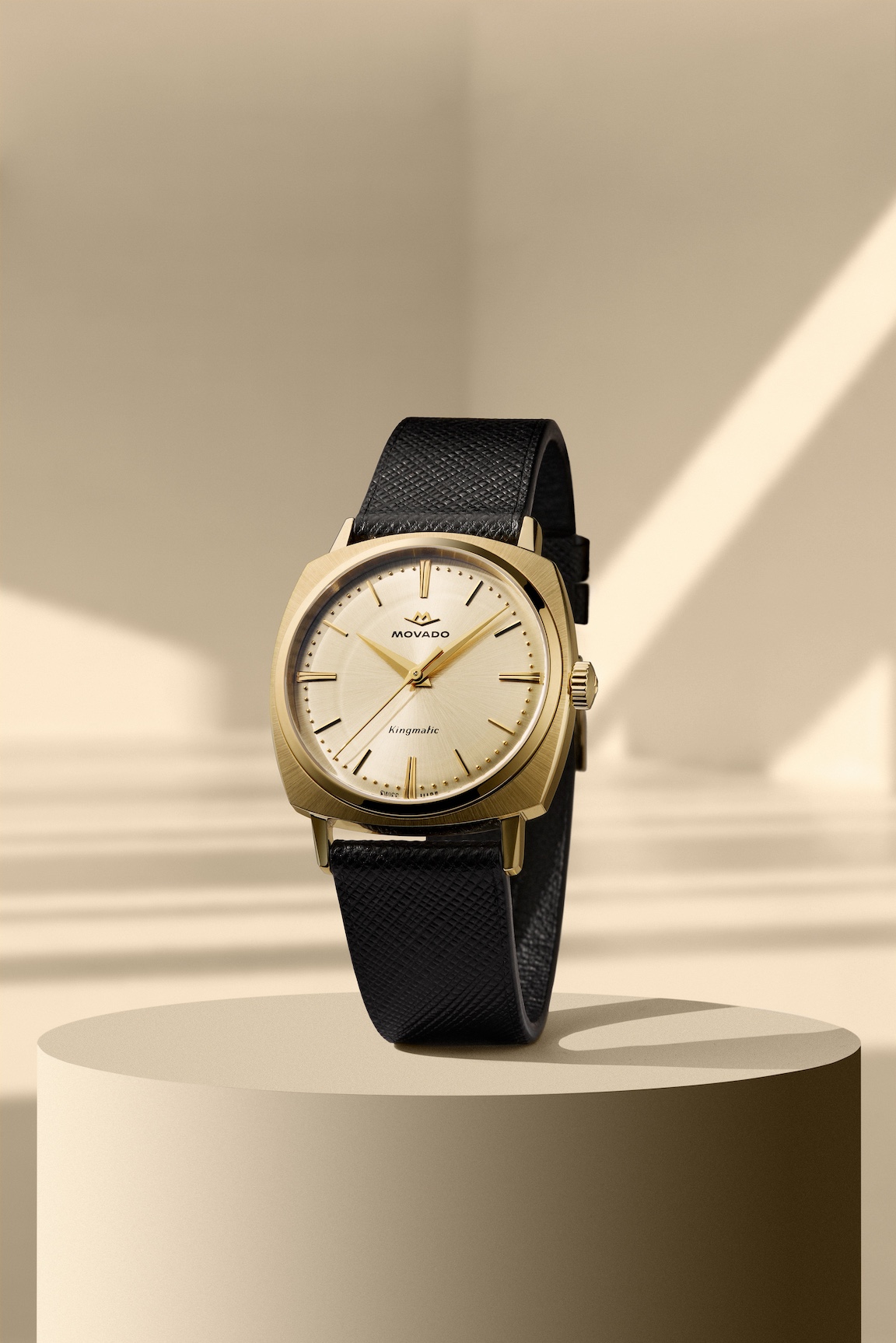
The Heritage Kingmatic, for instance, revives one of the company’s most elegant post-war designs. Originally introduced in the 1950s, the Kingmatic reflected a period when Movado was producing sophisticated dress watches that often get overshadowed today by the Museum Dial. The new version captures that refinement while updating it for contemporary collectors.
Even more surprising is the Heritage 1917. Drawing inspiration from one of Movado’s earliest Art-Deco inspired square wristwatches, it recalls a time when the brand was experimenting with geometry and form decades before such designs became fashionable again. Looking at it today, it feels remarkably modern for a watch whose roots stretch back more than a century.
Movado Heritage Kingmatic
Of course, Movado could hardly celebrate 145 years without acknowledging the design that changed its fortunes. A new Museum and a sporty chic Museum Imperiale watch recalling a 1980’s piece with iconic dot motif on the bezel, bridge past and present, proving that the famous dot remains as relevant today as it was when Horwitt first imagined it nearly eight decades ago.
All of the anniversary watches, like all Movado watches, are made in Switzerland according to exacting standards and exemplify that Movado continually reinvents itself and that it isn’t just the dot. The dot merely became so famous that it obscured the remarkable story around the rest of the brand.

The Movado 1881 Automatic underscores that the brand has been Swiss made since 1881.