



Roger Dubuis Excalibur The Kabuto Legacy.
Roger Dubuis has spent more than a decade turning its Excalibur Knights of the Round Table collection into wearable sculpture, replacing traditional hour markers with miniature figures that transform each watch into a narrative. Its newest creation leaves medieval Europe behind and journeys to 17th-century feudal Japan. Meet the $384,000 Roger Dubuis Excalibur The Kabuto Legacy.
Traveling from medieval Europe to Japan in the 1600s, Roger Dubuis’s newest masterpiece draws inspiration from the samurai leaders who helped unify the country after decades of conflict. Their historic meeting took place at Edo Castle, where the Imperial Castle stands today.
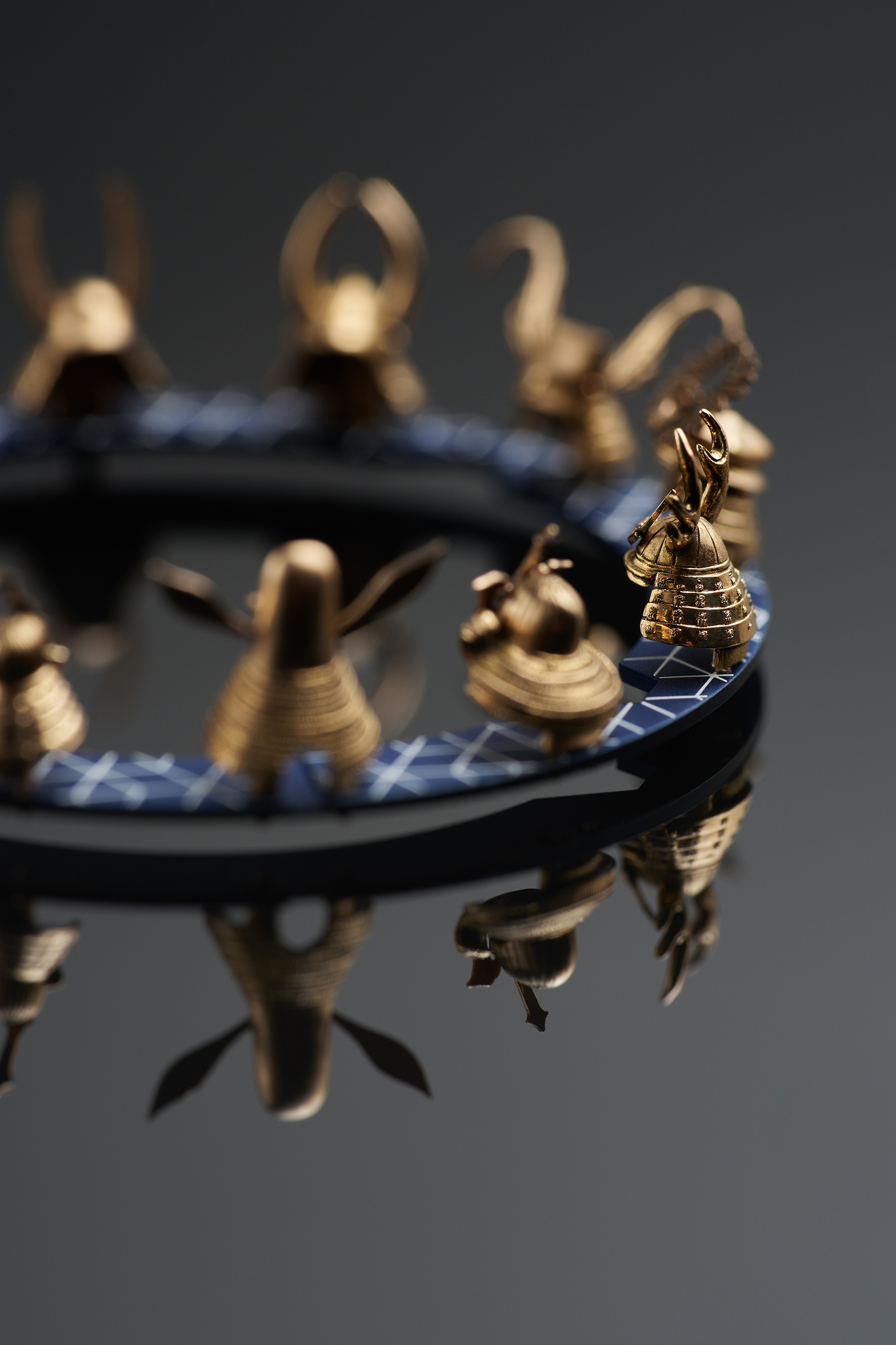
A close up look at the kabuto emblems.
Rather than depicting the twelve Knights of the Round Table, Roger Dubuis replaces them with sculpted ceremonial kabuto helmets, each representing the lineage, ideals and philosophy of a different samurai leader with carved and sculpted items or symbols that underscore the philosophies of the leaders.
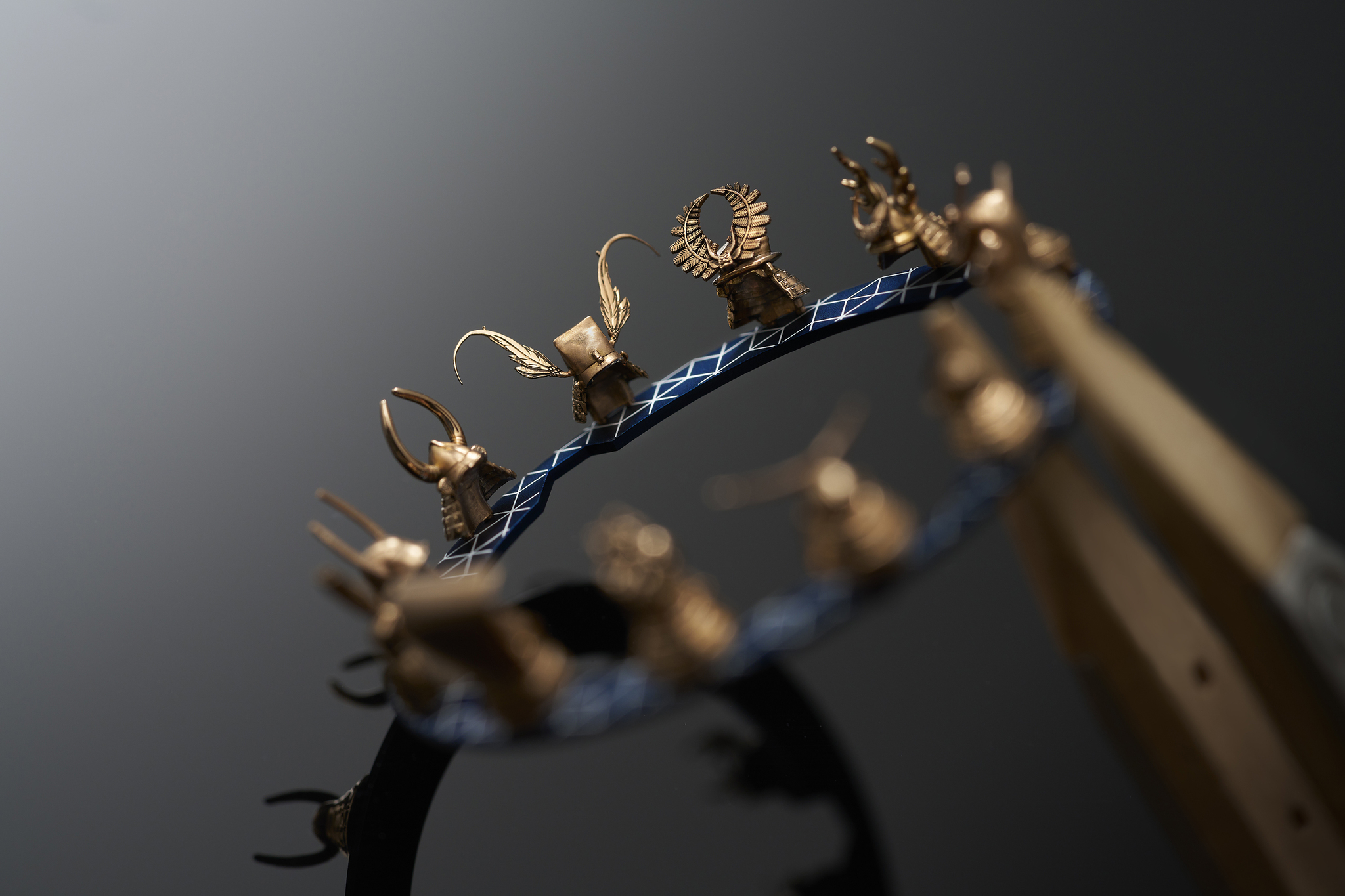
The dial artistry is what immediately commands attention. Five of the twelve kabuto honor the principal figures behind Japan’s reunification. At 12 o’clock sits the helmet of Tokugawa Ieyasu, whose crest features a fern symbolizing success and longevity.
Just 18 pieces of the Roger Dubuis Excalibur The Kabuto Legacy
will be made.
Around the dial appear four of Tokugawa’s legendary generals—known as the Four Heavenly Kings—with helmets honoring Honda Tadakatsu, Sakai Tadatsugu, Sakakibara Yasumasa and Ii Naomasa, each distinguished by symbolic elements representing protection, righteousness, martial virtue or bravery.
At the center of the watch sits an abstract architectural interpretation of Edo Castle. Constructed of 17 elements in multiple layers and finished with polishing, circular brushing and shot blasting, the structure is coated in a deep indigo blue inspired by the dye historically used for samurai garments and later celebrated throughout Japanese decorative arts. The result of this layered construction is remarkable depth and architectural presence.
Powering the watch is the manufacture’s automatic RD821 caliber, bearing the prestigious Poinçon de Genève (Hallmark of Geneva) certification attesting to its high watchmaking standards. The movement incorporates 172 components and fourteen different finishing techniques, allowing Roger Dubuis to maintain the architectural openness required by the dial design while delivering exceptional precision.
Housed in a 45 mm 18-karat pink gold Excalibur case, The Kabuto Legacy is made in a limited edition of just 28 pieces with a blue enamel ring surrounding the crown and a blue calfskin strap that boasts stitched leather strips designed to evoke traditional samurai armor. Even the caseback continues the narrative, with the twelve samurai crests laser engraved around the sapphire display back.
To ensure historical authenticity, Roger Dubuis collaborated with Japanese historian Frederik Cryns, a consultant on the Emmy-winning television series Shōgun. That partnership reinforces the concept of the timepiece as a historical narrative, while deftly combining the centuries-old art of watchmaking, sculpture and engraving.
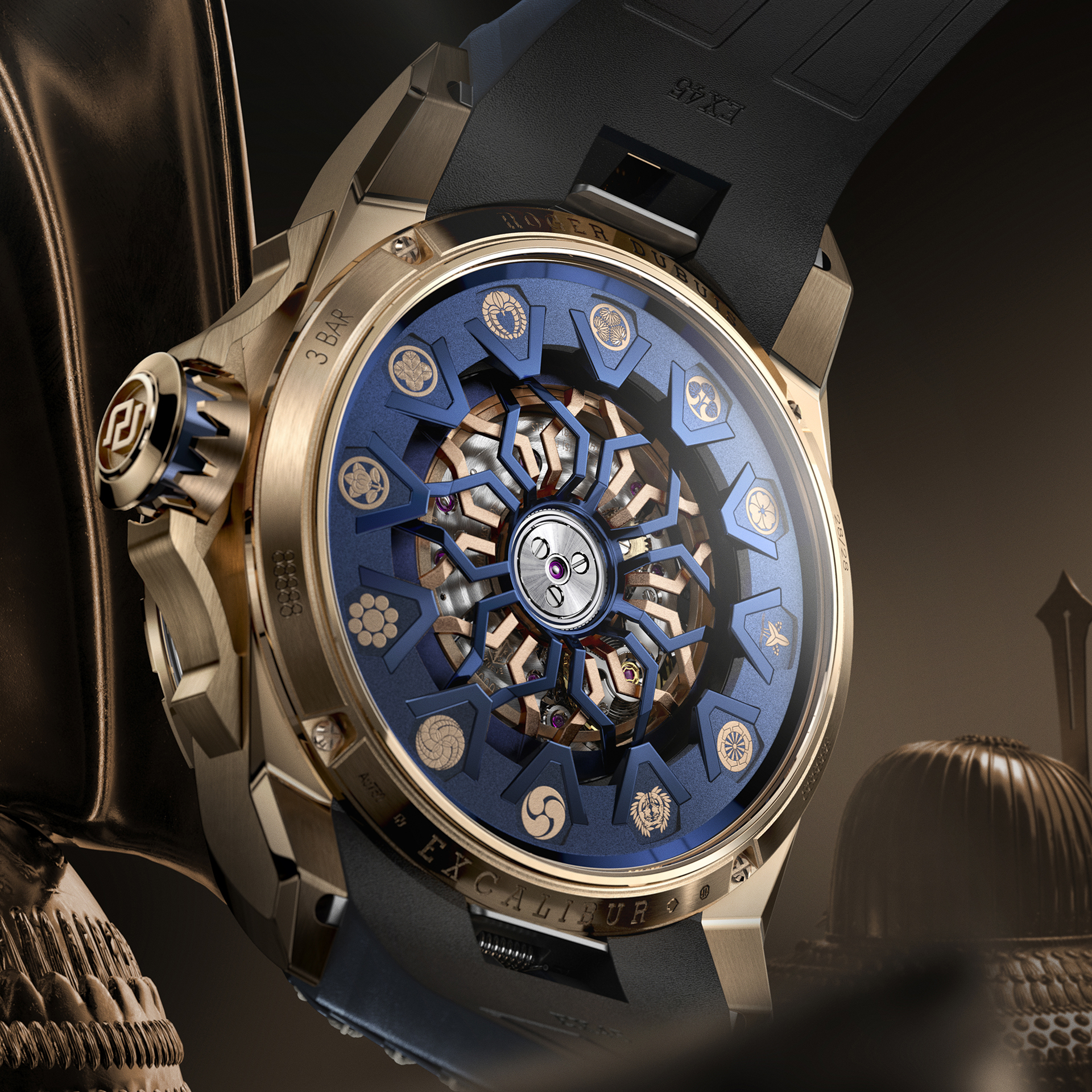
The Roger Dubuis Excalibur The Kabuto Legacy retails for $384,000.
(Portions of this article by Roberta Naas first appeared on Forbes.com.)