


A. Lange & Sohne Triple Split now in platinum
There are few watch brands that embody German watchmaking quite like A. Lange & Söhne. Its watches are perfectly indicative of the German design ethos — clean and sophisticated, but what happens beneath those carefully considered dials always ranges from beautifully traditional to incredibly complex. Today, as the brand releases new renditions of its Triple Split chronograph and its beloved 1815 Up/Down, I am more struck than ever by its ability to demonstrate two totally different sides coming from under one roof.
Having visited the manufacture in Glashütte, and having witnessed A. Lange & Sohne’s progression over the years, I remain impressed by its ability to continually push the boundaries of mechanical and technical innovation, as well as to re-interpret its collector favorites in irresistible renditions. The new pieces demonstrate that prowess.
The Platinum A. Lange & Söhne Triple Split
A. Lange & Sohne platinum Triple Split
The Triple Split is unquestionably the technical star of the new releases. When A. Lange & Söhne unveiled the first Triple Split watch in 2018, it was a milestone in chronograph development. Building on the brand’s earlier Double Split, it extended the rattrapante, or split-seconds, concept to seconds, minutes and hours. Eight years later, it remains the only split-seconds chronograph capable of measuring intermediate and comparative times for as long as 12 hours.
Essentially, the watch can time two events that begin simultaneously but end at different points, lasting up to 12 hours, a considerably longer period than a traditional split-seconds chronograph. It gets its Triple Split name from its ability to split three pairs of hands, seconds, minutes and hours., allowing intermediate and comparative times to be measured. It is also equipped with a flyback function that allows the timing operation to be stopped, reset and restarted with a single push.
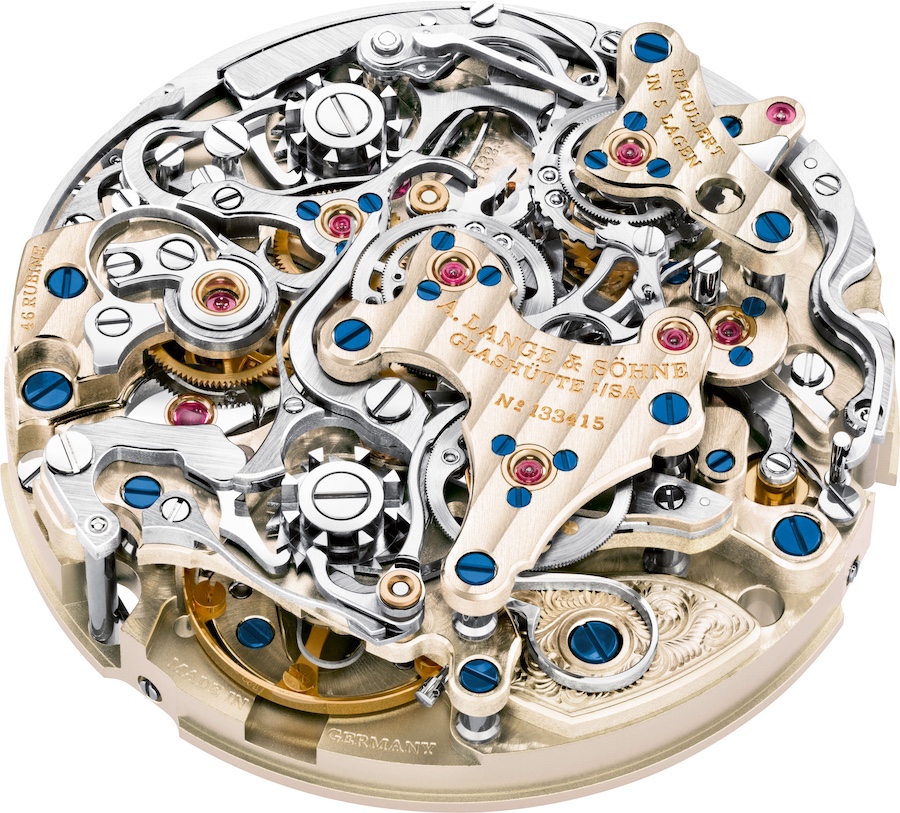
The complicated movement of the A. Lange & Sohne platinum Triple Split consists of 567 components.
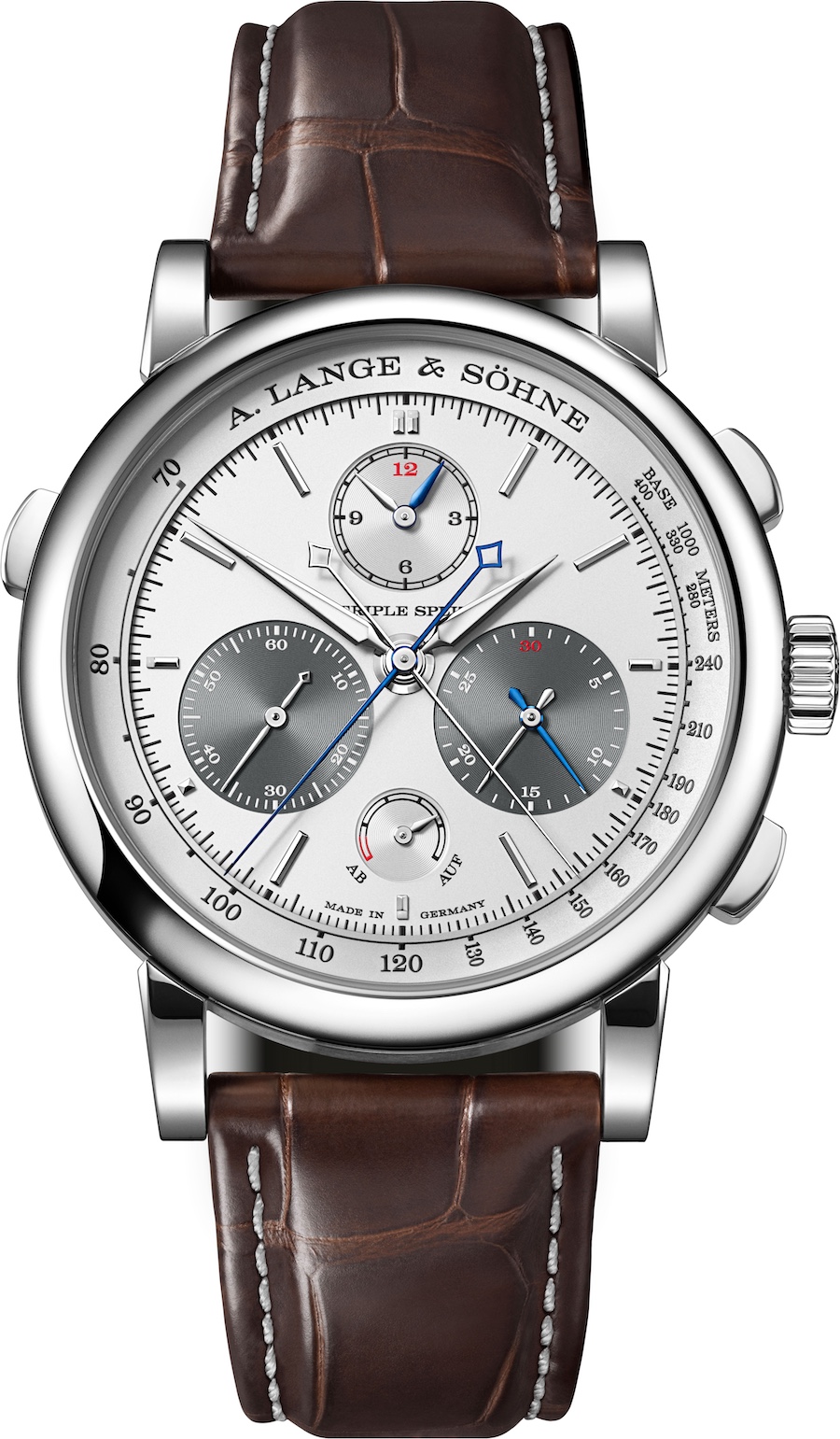
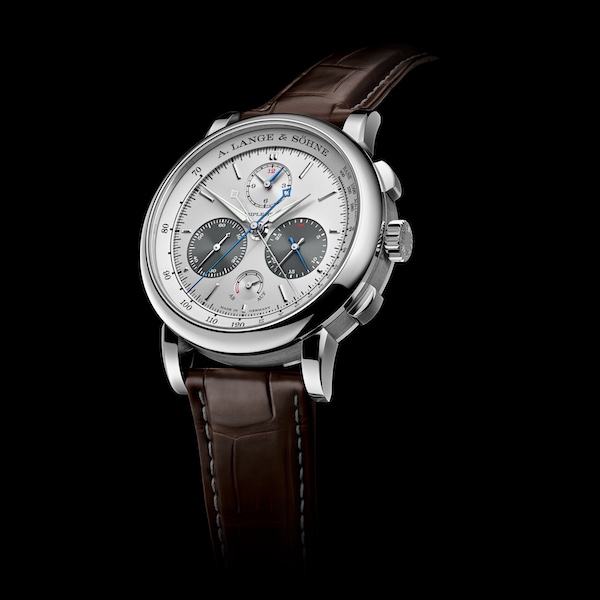
For 2026, the mechanical architecture remains the same, but the Triple Split takes on a decidedly cooler look. The 43.2mm case is crafted in 950 platinum and houses a rhodié-colored dial with darker gray subsidiary dials. Blued rattrapante hands and subtle red accents add contrast, and the watch is finished with a dark-brown alligator strap. Limited to 100 pieces, it follows the original 2018 white-gold version with gray dial and the pink-gold and blue-dial edition introduced in 2021.
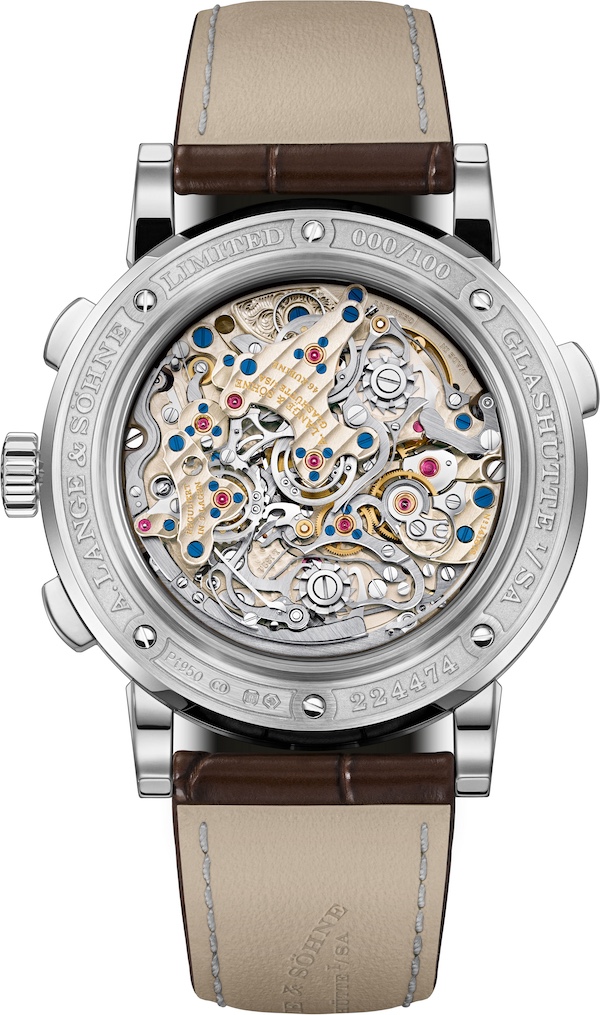
Just 100 pieces of the A. Lange & Sohne platinum Triple Split will be made.
Inside is the manually wound manufacture Caliber L132.1, composed of an impressive 567 parts and offering 55 hours of power reserve in addition to the triple Rattrapante mechanism. Visible through the sapphire crystal caseback, the movement is also a reminder that with Lange, technical complexity and traditional hand finishing are expected to coexist. Its untreated German-silver bridges feature Glashütte ribbing, while gold chatons, blued screws and the hand-engraved balance cock underscore the attention paid to finishing even a movement of this complexity. It is expected to retail for approximately 210,000 Euro.
The Quieter Side: A. Lange & Sohne 1815 UP/DOWN
If the Triple Split demonstrates what A. Lange & Sohne can accomplish when it pushes mechanical complexity to an extreme, the 1815 UP/DOWN makes almost the opposite argument.
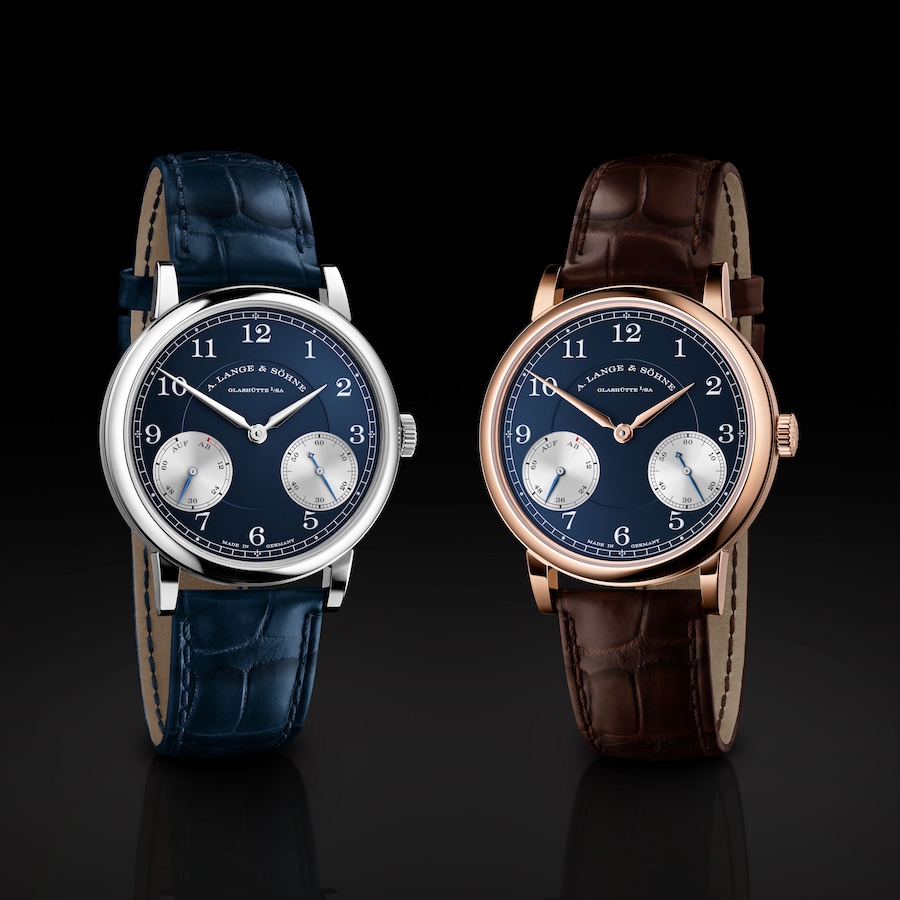
A. Lange & Sohne 1815 Up/Down new versions
Measuring just 37.5mm in diameter and 8.7mm thick, the manually wound watch is restrained, beautifully proportioned and deliberately rooted in Lange history. Its railway-track minute scale, Arabic numerals and recessed central dial recall the historic pocket watches for which the company was originally known. Even the collection name carries historical significance: 1815 was the birth year of Ferdinand Adolph Lange, who established his manufacture in Glashütte in 1845 and helped lay the foundation for Saxony’s precision-watchmaking industry.
The two new versions pair a rich blue dial and argenté-colored subsidiary dials with either a pink-gold or white-gold case. Each is limited to 300 pieces.
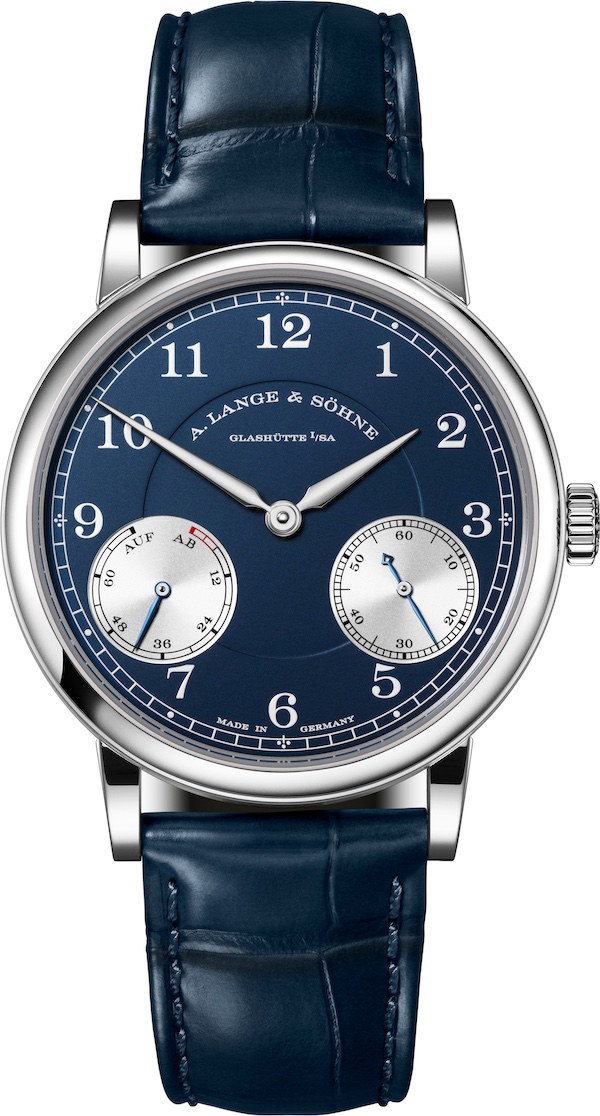
A. Lange & Sohne 1815 Up/Down in 18-karat white gold with rich blue dial.
The defining feature, naturally, is the Up/Down power-reserve indication. The small display uses the traditional German AUF (up) and AB (down) markings to show the status of the 72-hour power reserve. And while it looks deceptively simple on the dial, Lange being Lange, there is more going on underneath. Rather than adding the power-reserve display to an existing caliber as a module, the mechanism is integrated directly into the manually wound L051.2 movement using a specially developed, space-saving planetary gear system.
Through the caseback, the movement reveals many of the traditional signatures collectors associate with A. Lange & Söhne, including an untreated German-silver three-quarter plate, gold chatons secured by blued screws and the hand-engraved balance cock. Each of the versions is expected to retail for approximately 45,000 Euro.
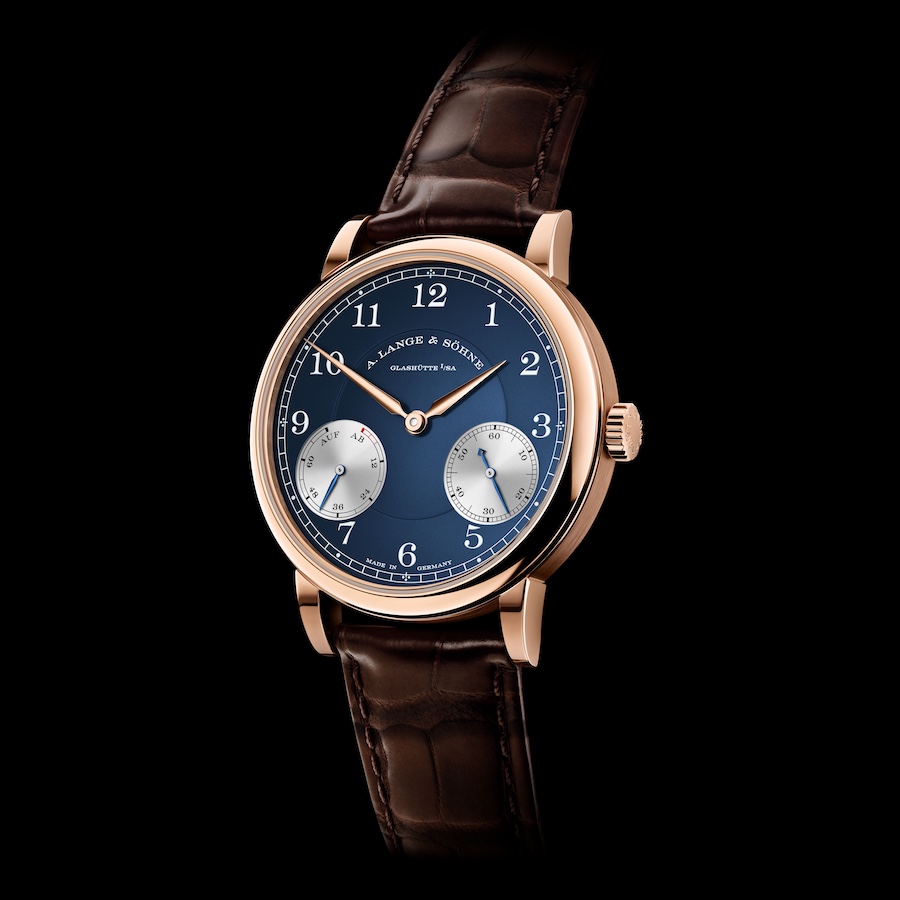
A. Lange & Sohne 1815 Up/Down in rose gold.
Taken together, the releases offer an interesting snapshot of what A. Lange & Söhne does particularly well. The Triple Split is unabashedly about mechanical ambition — a chronograph that, eight years after its debut, still occupies a category essentially its own. The 1815 Up/Down is quieter, drawing instead on the proportions, aesthetics and watchmaking traditions that reach back to Ferdinand Adolph Lange. One pushes complexity; the other exercises restraint.
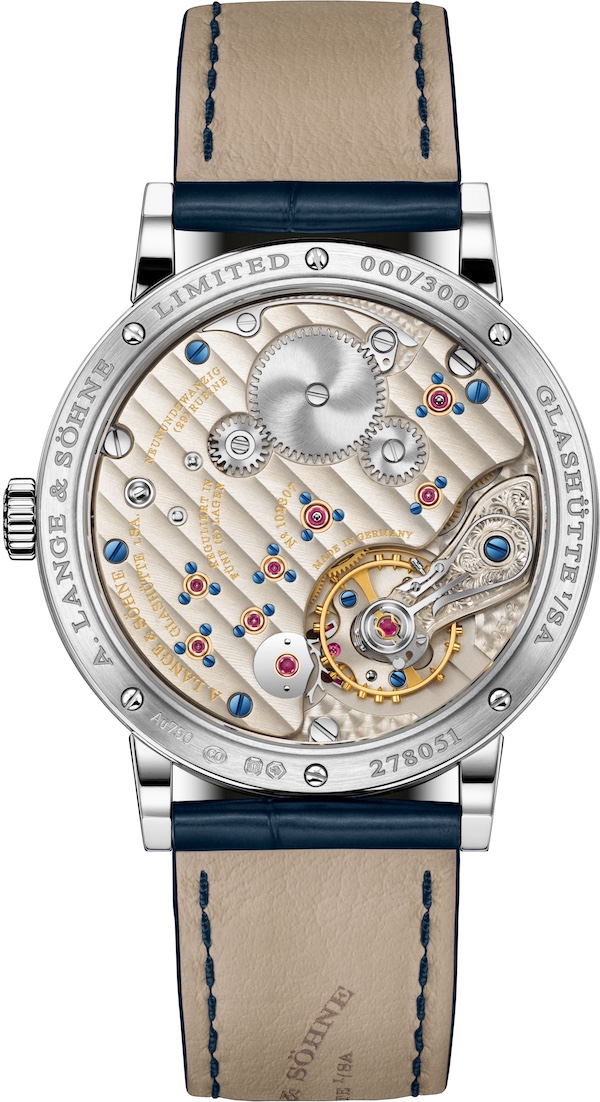
Just 300 pieces of each of the new A. Lange & Sohne 1815 Up/Down watches will be made.