


Via its Artist in Residency program with The Met, Vacheron Constantin propels the future of craftsmanship.
What happens when a furniture maker, a ceramic artist and a goldsmith are granted an 18-month-long artisan residency that gives them access to centuries of artistic treasures at The Metropolitan Museum of Art and the specialized decorative arts workshops of Swiss watch brand Vacheron Constantin? The answer was unveiled in New York last week, when the three artists presented their completed works at The MET, revealing how their experiences inspired three very different creations.
The initiative, launched in May 2025, brings together two institutions with a shared interest in preserving traditional craftsmanship while encouraging contemporary artists to explore new creative directions. The program is part of a broader partnership between Vacheron Constantin and The MET that began in 2023.

The Met and Vacheron Constantin announce the winners of the global applications for the Artist in Residency Program. Left to right: Aspen Golann, Ibrahim Said, Joy Harvey.
Last year, I attended the launch of the residency at The Met Cloisters in New York, where the three participating artists — American furniture maker and woodcarver Aspen Golann, Egyptian-American ceramicist Ibrahim Said and Anglo-Italian goldsmith and jeweler Joy Harvey — were introduced. At the time, each was preparing to embark on a creative journey that would take them inside The Met’s collections and behind the scenes at Vacheron Constantin’s manufacture in Geneva.
Now, their finished works offer a look at how those experiences influenced their individual artistic visions.

MET x Vacheron Constantin Artisan Residency program.
Vacheron Constantin and the MET: Three Artists, Three Very Different Interpretations
For Aspen Golann, whose work explores historical American furniture-making traditions, the result is Vessel, a monumental wooden creation standing five feet tall. Crafted in her New Hampshire studio, the hollow sculptural form features intricate bas-relief carvings of foliage, fruit and horses.
Golann drew inspiration from American furniture dating from the 17th through 19th centuries that she studied at The MET, including elaborately carved wooden chests and decorative furnishings. During her time at Vacheron Constantin, she explored the Maison’s engraving and enameling techniques, gaining a deeper appreciation for the painstaking attention to detail that transforms functional objects into works of art.
That experience, she says, encouraged her to invest more fully in every aspect of her own creative process.
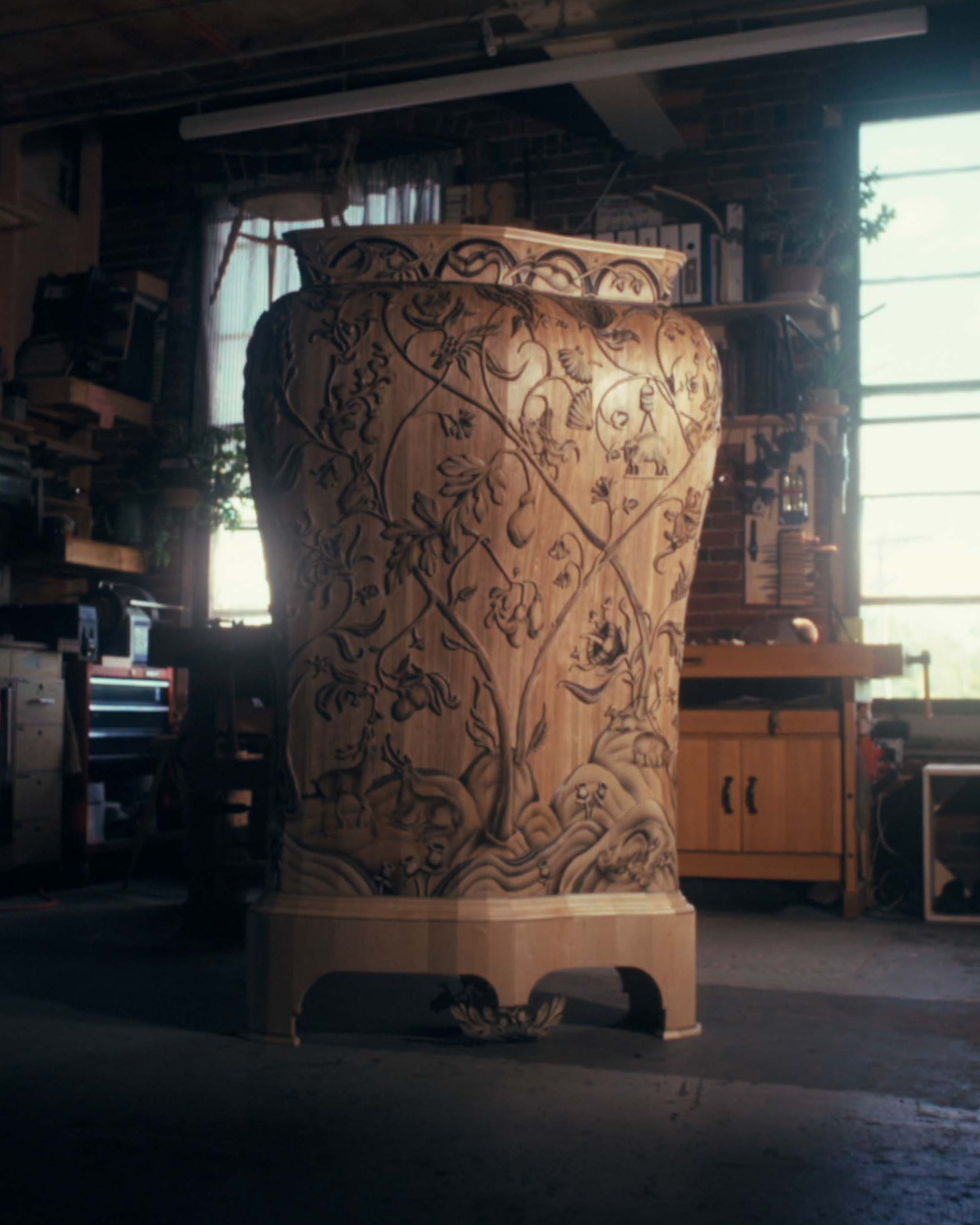
The Vessel by Aspen Golann stands approximately five feet tall.
For Ibrahim Said, whose ceramic artistry is deeply rooted in his Egyptian heritage, the project took an entirely different direction. His work, Shaping Time, is a three-tiered ceramic sculpture featuring intricate carvings, pierced surfaces and multicolored glazing.
Created in his North Carolina studio, the piece draws inspiration from ancient Egyptian and Islamic artifacts he studied at The MET, including an ancient Egyptian New Year’s bottle, jewelry and decorative objects. Its geometric forms also subtly reference Vacheron Constantin’s Maltese cross emblem.
Said, who comes from a family of potters in Egypt, found common ground with Vacheron Constantin’s artisans in their shared dedication to patience, precision and beauty. His sculptural creation brings together traditional ceramic techniques and contemporary interpretations of ancient design.
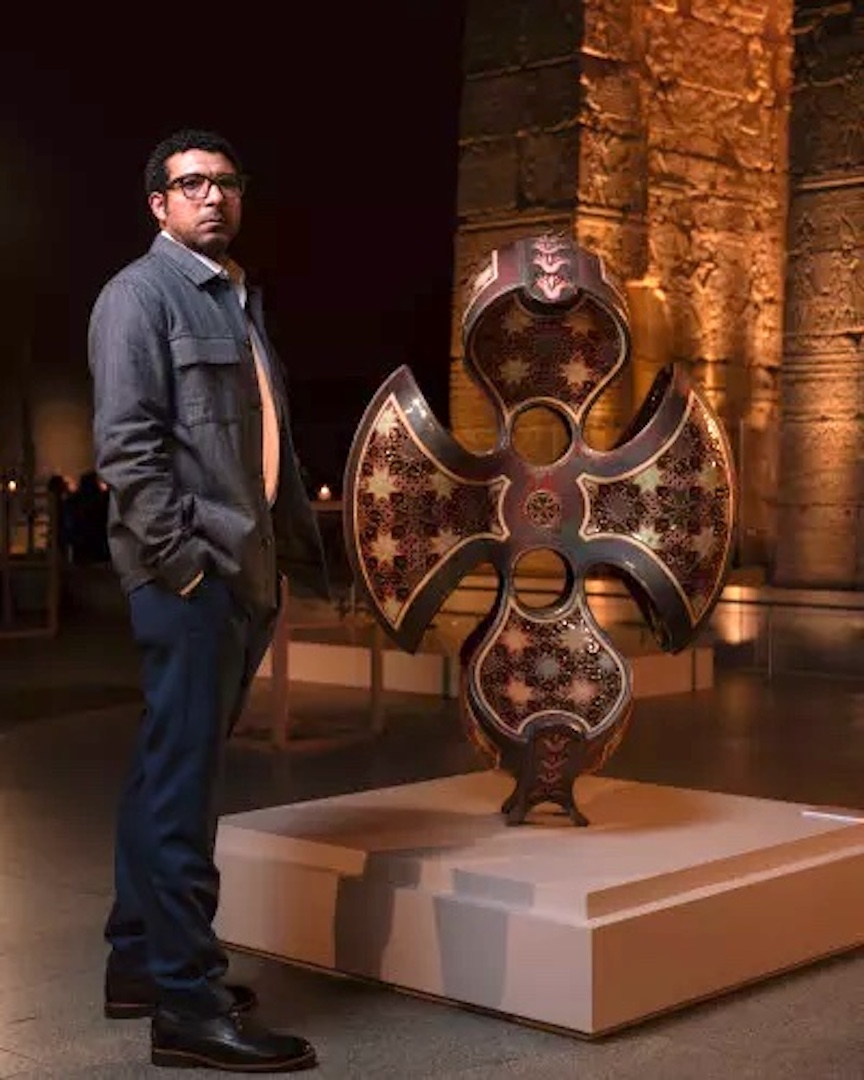
Shaping Time by Ibrahim Said
Perhaps the most direct connection to watchmaking can be found in Joy Harvey’s Ruined Splendour – Bronze Diadem. The Italian-based goldsmith created an elaborate bronze coronet using an assortment of metals, including copper, tin, gold and silver, drawing inspiration from ancient jewelry and headdresses she studied at The MET.
But rather than creating an object celebrating flawless beauty, Harvey deliberately introduced imperfections and elements of destruction into the piece. The diadem features delicate floral motifs, granulation and intricate metalwork, with some of its decorative elements incorporating guilloché techniques she explored at Vacheron Constantin.
After engraving patterns into the metal, Harvey intentionally distorted them through hammering, creating an object that speaks to the passage of time, the fragility of beauty and the idea that even damaged objects can possess extraordinary artistic value.
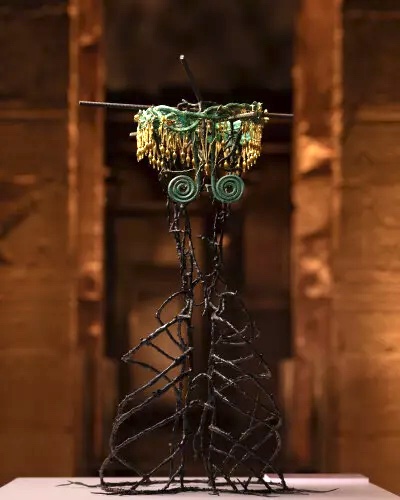
Joy Harvey’s Ruined Splendour – Bronze Diadem
Each of the works of art are the property of the individual artists and remain in their possession.
Beyond Watchmaking: Preserving Traditional Crafts
While the three works differ dramatically in materials, scale and artistic expression, they share a common thread: the reinterpretation of historical craftsmanship through a contemporary lens.
During the residency, the artists worked with museum curators, conservators and other specialists, gaining close access to objects in The MET’s collections and learning about their historical and cultural significance. They also spent time with Vacheron Constantin’s métiers d’art specialists in Geneva, exploring decorative techniques that have been practiced in fine watchmaking for generations.
For Vacheron Constantin, which celebrated its 270th anniversary last year, the residency extends a longstanding commitment to preserving and transmitting artisanal knowledge. The company traces that philosophy back to its founding in 1755, when Jean-Marc Vacheron signed his first apprenticeship contract. The program also builds on the brandr’s cultural partnerships with institutions including the Louvre in Paris and the Educational Institute of the Palace Museum in Beijing.
What makes this particular collaboration interesting, however, is that the artists were not asked to create watches. Instead, they were encouraged to bring what they learned back into their own disciplines, allowing techniques and ideas to cross boundaries between watchmaking, furniture making, ceramics and jewelry.Vacheron Constantin and the MET plan to welcome a new group of artisans for the program in 2027.